
1st International Conference on Environmental Design (ICED2020) – Plenary Lectures
Effect of nutrition and other environmental factors on cognitive decline
Dr. Eirini Mamalaki, Research Associate, Harokopio University, Athens, Greece

Dr. Eirini Mamalaki is a Dietician-Nutritionist, Researcher in the Department of Nutrition and Dietetics within the School of Health Science and Education at the Harokopio University of Athens (https://www.hua.gr/index.php/en/). Her academic qualifications are PhD (2020) from the Harokopio University of Athens, Master in clinical nutrition (2014) from the Department of Nutrition and Dietetics of Harokopio University of Athens and a Bachelor degree in Nutrition and Dietetics (2012) from the same department.
In the last years, Dr. Mamalaki’s main research interests have focused on eating behavior of older adults and on the impact of lifestyle factors on cognition and cognitive impairment of adults of older age. In line with this, she is participating in HELIAD study, which is a large-scale, multidisciplinary investigation involving the evaluation of a substantial number of factors relevant to dementia in two cities in Greece. She has examined, cross-sectionally and prospectively, the effect of diet, sleep and sociability on cognition of older adults and, with a research team, have won a grant for assessing the combined effect of lifestyle factors on cognition of older adults. Except for this, in the last years she is participating in a European collaborative project, where her work has focused on the dietary assessment of children and adolescents.
She has participated in various conferences, national and international, in the field of nutrition and dietetics and she has won a award for attendance in international congress in the field of nutrition. She has published 12 articles in international peer reviewed journals and >25 communications in conferences.
Integrated Water Resources Management (IWRM): principles and examples
Dr. Marianne Saba, Researcher, Department of Civil and Environmental Engineering, Faculty of Engineering, University of Balamand, Lebanon

Dr. Marianne Saba is a Researcher in the Department of Civil and Environmental Engineering within the Faculty of Engineering at the University of Balamand in Lebanon (http://www.balamand.edu.lb). Her academic qualifications are PhD from Polytech, University Lille 1 in France and the University of Balamand in Lebanon (2014), a Master in Chemistry and a minor in Environmental Engineering from the University of Balamand (2008), and a Bachelor degree in Chemistry (2006) from the University of Balamand in Lebanon.
In the last years, Dr. Saba’s main research interests have focused on two major tracks. The first is related to the assessment of sea water intrusion in coastline cities, river basin water pollution, water budget components and water quality. The second track is related to materials science and engineering where Dr. Saba precisely investigates the mechanical, chemical, microstructural and thermal properties of geopolymer-mortars made from local Lebanese sources or by substituting with recycled materials.
In line with this, she obtained a CNRS grant: “Recommendations for Using Recycled Concrete Aggregates in new Self- Compacting Concrete mixtures” (Main Investigator). Dr. Saba has co-supervised a research, involving deep spatial analysis to perform flood hazard mapping of El- Kalb River (Lebanon) where the student has won the ESRI Young Scholars Award 2020. In addition, Dr. Saba’s research in the material field is elaborated with a highly ranked Laboratory related to ceramic materials (IRCER in Limoges, France) where they work on the elaboration and characterization of geopolymer-based material (chemically, microstructural and thermally). She is also quite involved in main water foundations in Lebanon (Ibrahim Abd El AL Foundation for Sustainable Development) where she sits as the vice president of the youth foundation and an active member of the scientific committee. Dr. Saba participated in many conference from which the World Water Week conference in Sweden Stockholm (August 2019) where her involvement was under the MENA region (in the water field) and ECERS in Torino, Italy (June 2019) in the material field.
Concenpt and applications of Life Cycle Assessment (LCA)
Dr. Makram El Bachawati, Assistant Professor and Researcher, Department of Chemical Engineering, Faculty of Engineering, University of Balamand, Lebanon
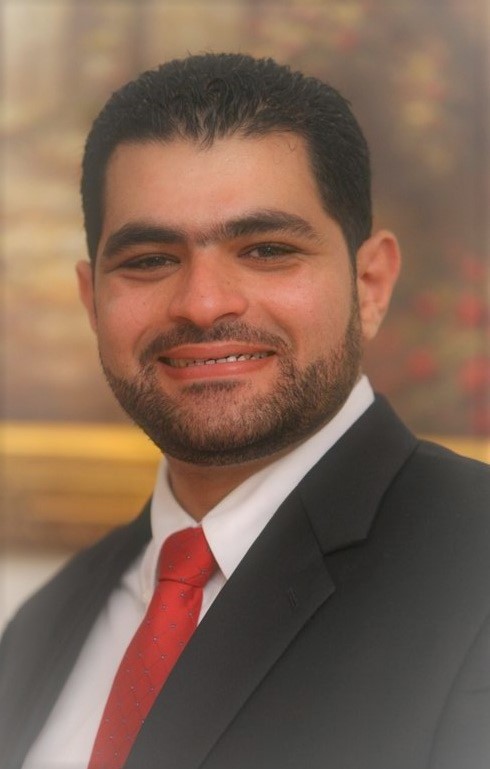
Dr. Makram El Bachawati is Assistant Professor and Researcher in the Department of Chemical Engineering within the Faculty of Engineering at the University of Balamand in Lebanon (http://www.balamand.edu.lb). His academic qualifications are PhD from the University of La Rochelle (2016) in France, Master 2 (Research) in Materials, Nanomaterials, and Multimaterials from the University of Paul Sabatier (2010) in France, and a Bachelor degree in Chemistry (2008) from the Lebanese University in Lebanon.
In the last years, Dr. El Bachawati’s main research interests have focused on Life Cycle Assessment (LCA) to assess the environmental impacts of a process or product. Precisely, he performs numerous LCAs related to biomass briquettes, green roofs, energy, foot products, sustainable construction materials, crude oil drilling and refining, distribution transformers, solid/liquid waste, etc. In line with this, he was selected as a national LCA expert by two EU-funded projects: SABIOP and SwitchMed to conduct full LCA studies related to biomass briquettes and wine. In addition, Dr. El Bachawati has conducted research on green infrastructure (e.g. green roofs and biosolar green roofs) in urban environments as effective tools to mitigate urban heat islands and provide ecosystem services. He explicitly assessed the impacts of these sustainable technologies on the energy consumption of residential buildings and on the quality and quantity of drainage water.
Coastal zone: natural vs human induced hazards
Dr. Anna Karkani, Research Associate, National & Kapodistrian University of Athens, Athens, Greece
Dr. Anna Karkani holds a BSc from the Faculty of Geology & Geoenvironment of the National & Kapodistrian University of Athens (NKUA) and an MSc on the subject ‘Oceanography and Management of Marine Environment’.
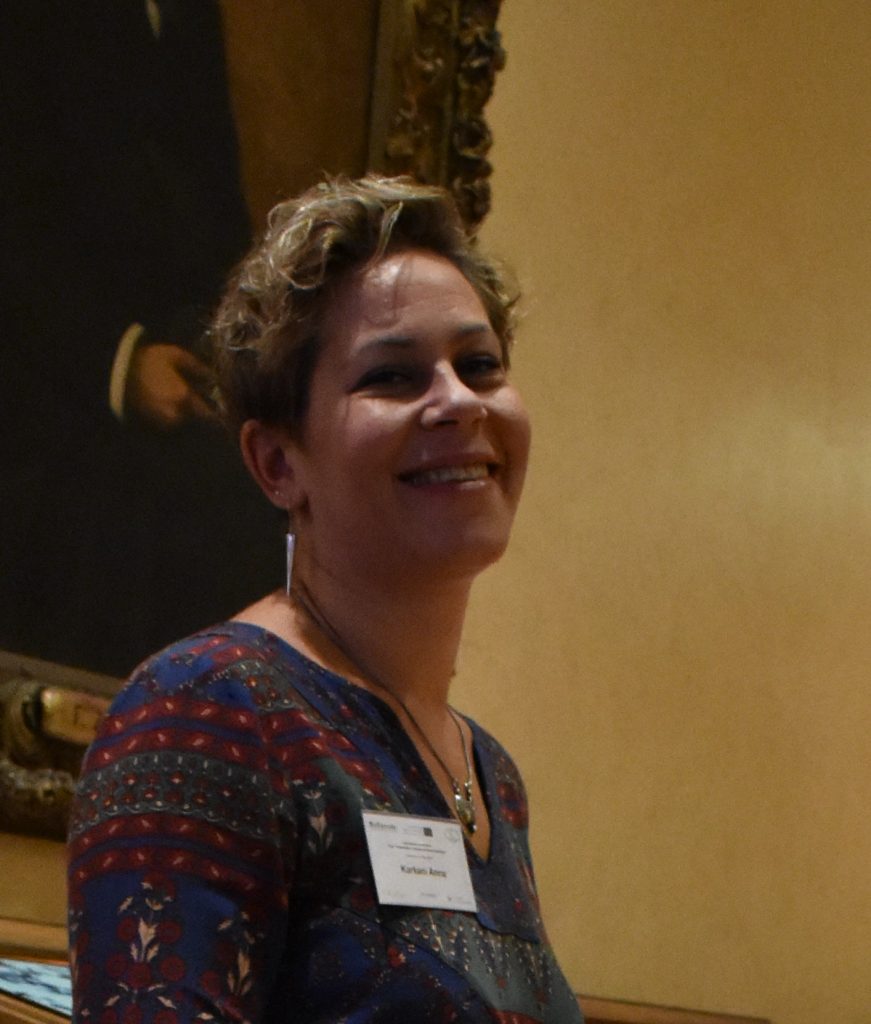
She received a scholarship from NKUA for her PhD, which was on the topic of “Study of the geomorphological and environmental evolution of the coastal zone of Central Cyclades”, through the study of submerged beachrocks and corings in the coastal zone of Paros and Naxos. In 2014, she received a grant from DAAD for training on OSL–Optically Stimulated Luminescence at Leibniz Institute for Applied Geophysics, Hannover (Germany).
Her research interests are mostly focused on geomorphology, coastal geomorphology, natural hazards, palaeogeography and sea level changes. She has participated in a number of research programs related to geomorphology and environment (Erasmus+, Bilateral Programme Greece-France, Cooperation 2011, INTERREG MED, FP7, COST Action ES0701). She has 15 publications in scientific journals and 26 conference announcements. She also frequently participates in the organization of conferences, workshops and training schools related to geomorphological subject